Available for consulting — Milan / Remote

Lorenzo Bolzani

Real-world ML systems — computer vision, document AI, LLM agents integrated with existing processes. From first experiments to a complete product.

Computer Vision Object Detection LLM Integration OCR / Document AI System Architecture
Get in touch →
Scroll
00 — What I can help with

Computer vision on real-world images

Detection, analysis and measurement of objects in conditions that aren't controlled — worn documents, dense shelves, variable lighting, partial occlusion. Problems where off-the-shelf models fail and the solution requires custom training: from data curation to architecture choices to deployment.

LLMs embedded in real workflows

LLM agents that work within domain-specific constraints and produce output your existing systems can use — structured data, code, API calls, hardware commands. Custom DSLs, tool design, feedback loops.

AI on top of existing systems

Working with teams to find where AI fits in their process — experiments, focused prototypes, realistic evaluation. Adding the AI layer without rewriting what already works.

From prototype to deployment

I get to working prototypes quickly, and I know what it takes to keep them running. Some of the systems I shipped are still in production after 20 years.

01 — Profile

Building
ML systems
for production.

30+
Years engineering
10+
Years ML / AI
NIST
Evaluated biometric system
15y
Systems still in production

My background spans from enterprise systems programming to machine learning and computer vision since 2016. That range has practical value: I know why SIFT still has a place, when XGBoost on good features beats a neural network, and when a diffusion model is the right tool. I work on systems under real-world constraints — noisy data, legal requirements, hardware that misbehaves, users who are not data scientists.

Recent focus: computer vision for complex detection problems, document AI, and LLM agents. I work primarily with the open-source ecosystem — from academic paper implementations to recent research repositories. I build domain-specific tooling at the intersection of classical CV and modern deep learning and LLMs where neither alone is sufficient.

I work independently as a consultant on defined engagements. Milan-based, comfortable working remotely across Europe.

02 — Selected Work
images/sandra-plc-ui.jpg
1 / 2
002

SandraAI — LLM-driven PLC programming

AI assistant for Siemens TIA Portal that generates ladder diagram networks from natural language via a custom DSL, with bidirectional XML import/export. Built on a Claude agent SDK with domain-specific tooling and Siemens Openness API integration.

LLM AgentsCustom DSLTIA PortalSiemens S7Claude SDK
Beta
images/bookshelf-demo.jpg
1 / 2
003

Bookshelf Inventory Detection

PWA for automated book inventory from a single shelf photo. Detects from a single photo 3000+ densely packed, tilted, partially occluded spines combining oriented bounding box detection (for exact item tracking), with LLM-based OCR to handle ambiguous OCR output semantically. No installation required.

OBB DetectionOCRLLM ValidationPWAPython
In development
images/sd3d-1.jpg
1 / 2
004

3D Rendering Stylisation

AI-assisted stylisation of video game level mockups. Conditioned Stable Diffusion using depth maps, edge maps, textual descriptions and style images to produce visually coherent decorations of 3D renders — maintaining geometric constraints while transforming the visual surface.

Stable DiffusionControlNetLoRADepth Conditioning
Delivered
images/multiagent-1.jpg
1 / 1
005

Multi-agent Code Generation

Team orchestration for AI-driven software development implementing an XP-inspired process (XP4Agent) over a Matrix/OpenClaw backbone. Coordinates specialised agents for planning, implementation, review and testing with structured handoffs.

Multi-AgentLLM OrchestrationCode GenerationXP Process
Research
images/skeleton-1.jpg
1 / 1
006

Skeleton Pose Matching for Video

Custom-built tool for pose-driven video synthesis. Indexes skeletal keypoints across 10M+ video frames, with a query interface for pose similarity search. Supports custom joint selection, per-joint weighting and grid-search offset to surface matches with slight spatial displacement.

Pose EstimationVideo ProcessingKeypoint DetectionOpenCV
Research
images/rlhf-1.jpg
1 / 1
007

RLHF Fine-tuning Pipeline PoC

End-to-end RLHF pipeline for domain-adapted language models built on TRL and Unsloth with LLaMA-family base models. Preference dataset construction, reward model training and PPO fine-tuning — optimised for single-GPU with quantisation-aware LoRA.

RLHFTRLUnslothLLaMALoRA / QLoRA
Personal research
03 — Historical context
Systems from a previous chapter
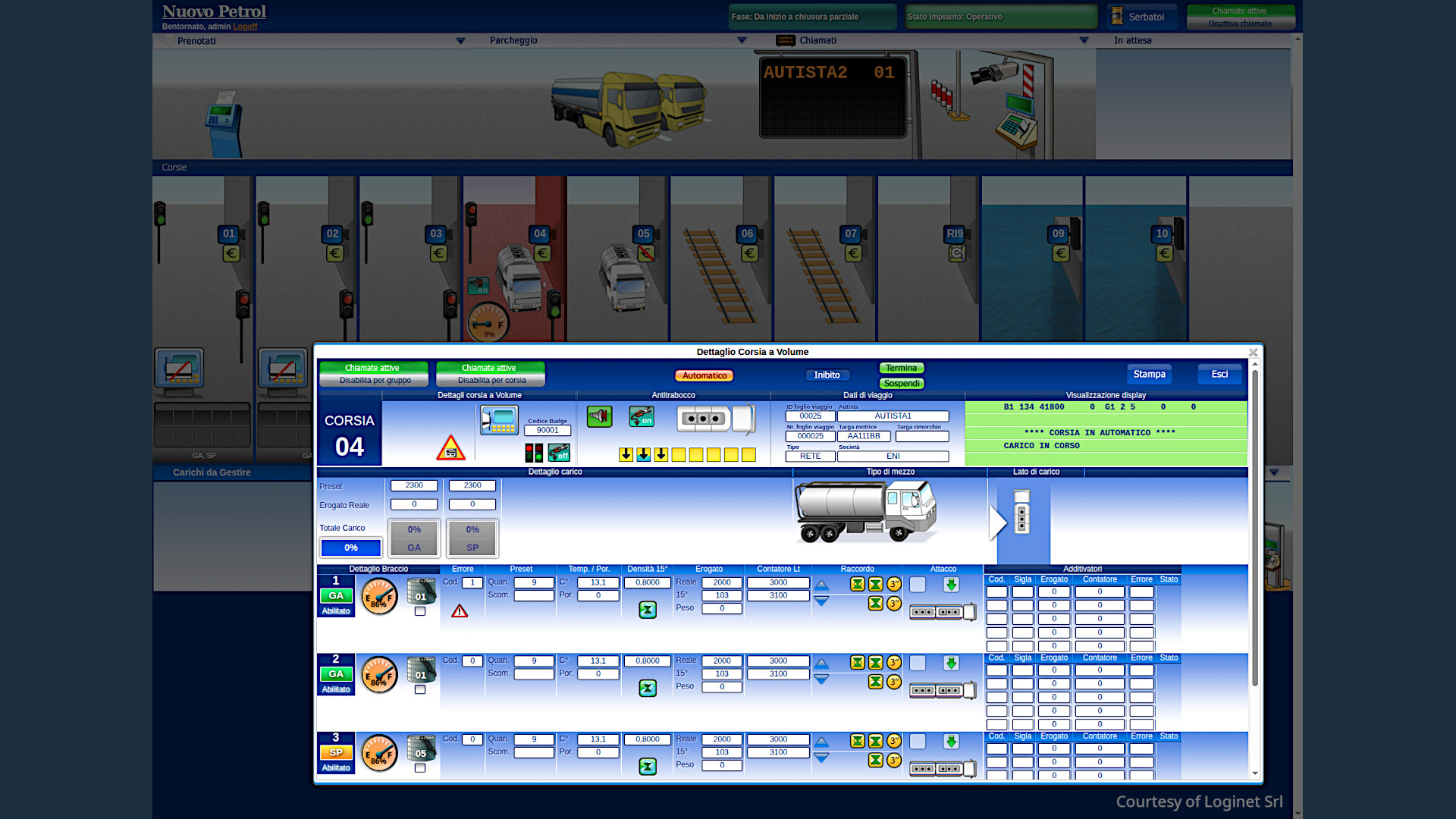
InfoCert integration platform Middleware backbone (Camel / ServiceMix) underpinning InfoCert's electronic invoicing service and several enterprise integrations. In production for over 15 years.
Earlier work (1995–2010) SAP-integrated budget planning (RAS/Gesi), pharma B2B e-commerce, edge face recognition on Raspberry Pi, SSO systems, LDAP synchronisation — the long tail of someone building things since 1995.
04 — Writing
Nov 2025
Robust Fall Detection Across Camera Viewpoints — VIRA-GCN (Sensors, MDPI)
A common failure mode of skeleton-based fall detection models: they work well on the camera angle they were trained on, then fall apart at a different perspective or with partial occlusion. This paper introduces VIRA-GCN — an adaptation of RA-GCNv2 — with two practical fixes: a synthetic viewpoint augmentation pipeline that generates rotated and occluded training sequences without additional hardware, and a consensus-based inference-time aggregation over multiple synthetic views. Result: 99.81% accuracy on Le2i, 7.50ms inference, 4M parameters. Generalises across datasets via a per-joint affine transformation from Kinect to MMPose format.
Peer-reviewed · Sensors (MDPI) · Skeleton-based CV · Co-author
Nov 2017
Location-aware kernels for large image tiled processing
Working on OCR of large noisy images, I needed CNNs to know where in the global image each tile was being processed. The solution — injecting explicit spatial coordinates as extra channels — was developed independently while building an operational system, eight months before Uber AI Labs published the same idea as CoordConv at NeurIPS 2018.
Computer Vision · Independent research → converged with NeurIPS 2018
Jun 2018
Automatic evaluation of image alignment accuracy
When you have thousands of aligned face or document images and can't annotate them all, how do you measure alignment quality without ground truth? A pragmatic approach using local template matching and IoU against expected feature positions — with a semi-supervised bonus if quality is high enough.
Document AI · Quality estimation without labels
05 — Contact

Tell me about
your problem

Available for consulting on computer vision, document AI, LLM integration and ML systems. I work best when the problem is concrete and the stakes are real.

Milan-based. Remote engagements across Europe welcome.

lorenzo.bolzani@gmail.com → linkedin.com/in/lorenzobolzani →